Skip to content
Balancing Your Wealth Wheel

Balancing Your Wealth Wheel

Strategies For Financial Harmony

The Wealth Wheel Framework

Quick Answer: The Wealth Wheel framework organizes financial life into eight interconnected dimensions that must work in harmony: tax planning , entity structure , investments , business value , advisor coordination , wealth transfer , profit extraction , and risk management . When one dimension dominates at the expense of others, entrepreneurs experience costly imbalances—paying excessive taxes while neglecting succession planning, building investment portfolios while ignoring business value drivers, or accumulating wealth without transfer strategies.

Balanced wealth wheels require each dimension to be properly sized for your situation and systematically coordinated with all other dimensions, creating financial harmony that compounds wealth efficiently across generations.

Wealth Wheel Framework

David's Wobbling Wheel: The Danger of Imbalance

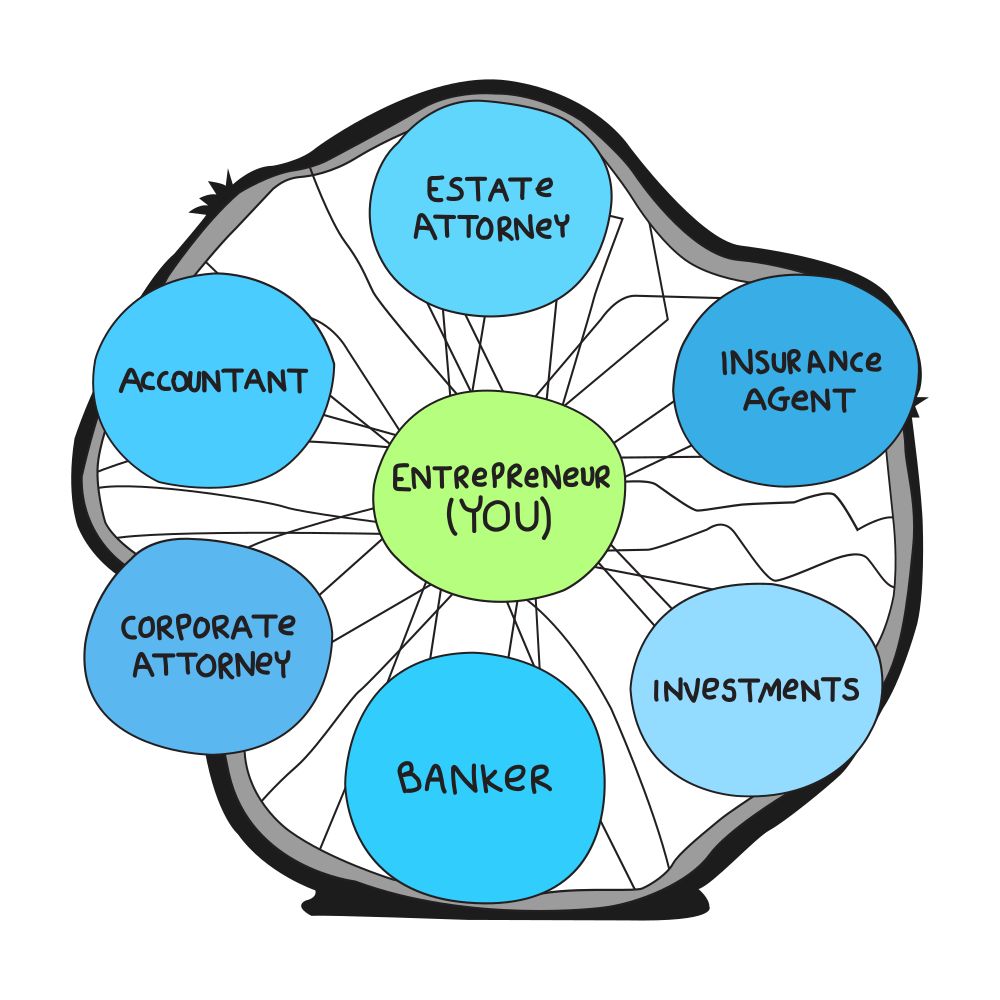
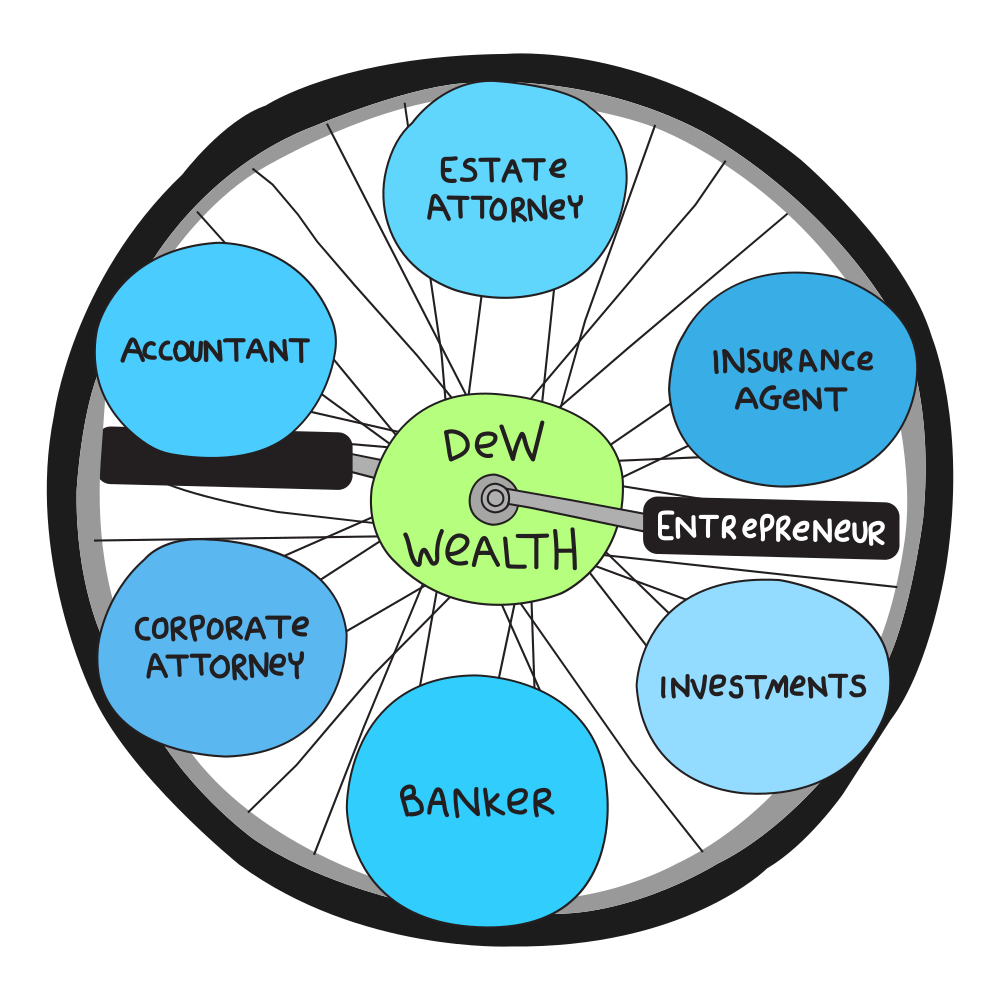
Picture a bicycle wheel with eight spokes. Each spoke represents a critical dimension of your financial life. When all eight spokes are properly tensioned and aligned, the wheel rolls smoothly. But when one spoke is too tight, another too loose, or several are misaligned, the wheel wobbles. Your wealth works the same way.

I watched David, a software entrepreneur with $15 million in company valuation, discover this reality the expensive way. He spent three years obsessing over investment returns—researching funds, comparing performance, optimizing allocations. His investment advisor delivered solid 11% annual returns.

Meanwhile, his business operated through a suboptimal entity structure costing $120,000 annually in excess taxes. His estate plan sat untouched for six years. He had no succession strategy despite approaching age 58. And his insurance coverage included massive gaps while paying for overlapping policies.

"My investments are killing it," David told me proudly.

"That's one spoke. But your wheel is wobbling."

We conducted a comprehensive wealth assessment revealing that while David's investment spoke was strong, six other spokes were dangerously weak. His focus on investment returns—the one dimension performing well—masked expensive problems everywhere else.

That's the wealth wheel imbalance trap: optimizing one dimension while other dimensions deteriorate.

David's Story

The Eight Spokes of Your Wealth Wheel (Part 1)

Each dimension requires attention proportional to your wealth stage and goals:

Tax Planning

1. Tax Planning

How much wealth you keep versus what you pay to governments. Proactive multi-year strategy coordinated across all income sources, entity structure optimized for current levels, investment tax efficiency integrated with business planning.

Entity Structure

2. Entity Structure

Legal framework through which you operate. Business operates through structure appropriate for current size, ownership structure facilitates succession or exit, operating agreements address key decisions, liability protection established and maintained.

Investments

3. Investments

How you deploy liquid capital outside operating business. Strategy must account for business concentration risk. If 60-80% of net worth sits in company equity, investment portfolio should provide diversification, not amplify concentration.

Business Value

4. Business Value

Systematic enhancement of company valuation through value driver optimization. Management team development, customer diversification, systems documentation, competitive positioning. Can increase exit proceeds $2-5M+ through strategic preparation.

The Eight Spokes of Your Wealth Wheel (Part 2)

Continuing the complete framework:

Advisor Coordination

5. Advisor Coordination

Ensuring multiple specialists work toward unified goals. Regular coordination meetings, shared strategy documents, conflict resolution when advisors disagree, accountability for coordinated outcomes. Prevents expensive gaps from siloed advice.

Wealth Transfer

6. Wealth Transfer

Succession planning and estate strategy. Business succession plan (family transfer, sale to partner, external buyer), estate documents current and coordinated, gift strategies implemented proactively, estate tax minimization strategies in place.

Profit Extraction

7. Profit Extraction

Optimal mix of salary, distributions, and retained earnings. Balance personal cash flow needs, business reinvestment requirements, tax efficiency, and retirement contributions. Many entrepreneurs extract too little (starving personal wealth) or too much (stunting business growth).

Risk Management

8. Risk Management

Comprehensive protection across all risk types. Liability insurance matching net worth, asset protection structures for high-risk professions, disability and life insurance appropriate for income replacement, cyber and professional liability coverage for modern risks.

Assessing Your Wealth Wheel Balance

Score each dimension 1-10 to identify imbalances:

Scoring Framework

1-3 (Critical Weakness): Dimension is dangerously neglected. Expensive problems exist or are imminent. Requires immediate attention. Example: No estate plan at $10M+ net worth, no liability insurance beyond state minimums, business entity structure unchanged in 10+ years.

4-6 (Adequate But Improvable): Basic foundation exists but significant optimization opportunities remain. Not crisis level but leaving value unrealized. Example: Estate plan exists but 5+ years old, adequate insurance but below net worth, entity structure functional but not optimized.

7-8 (Strong): Dimension well-managed with regular attention and updates. Above-average implementation. Example: Estate plan current and reviewed biannually, insurance coverage matches or exceeds net worth, entity structure reviewed annually.

9-10 (Exceptional): Dimension optimized at highest level. Example: Sophisticated estate strategies with dynasty trusts and family governance, comprehensive multi-layer insurance exceeding net worth, complex holding structures with multiple entities for different asset classes.

The Balanced Wheel Target

Ideal wealth wheel has all eight spokes scoring 7-10 with no dimension below 6. This indicates comprehensive attention across all wealth aspects without dangerous neglect in any area. Most entrepreneurs have 2-3 dimensions scoring 8-10 (areas of focus), 3-4 dimensions scoring 5-7 (adequate), and 1-2 dimensions scoring 1-4 (dangerous neglect).

The dangerous neglect dimensions create the expensive problems. A single dimension scoring 1-3 can cost more than all your well-managed dimensions deliver combined. David's entity structure weakness (2/10) cost $120K annually—more than his investment optimization delivered.

Balance Assessment

Common Wealth Wheel Imbalances

Recognizing these patterns helps identify your specific gaps:

Growth Focused

The Growth-Focused Entrepreneur

Strong: Business value (9/10), revenue growth (8/10)
Weak: Wealth transfer (2/10), risk management (3/10), tax planning (4/10)

Obsessed with building company but neglecting protection and succession. Vulnerable to estate disasters, liability claims, unnecessary taxes.

Investment Focused

The Investment-Focused Entrepreneur

Strong: Investments (9/10), tax planning (7/10)
Weak: Business value (3/10), entity structure (4/10), profit extraction (5/10)

Optimizing investment portfolio while business value drivers deteriorate. Missing millions in company valuation enhancement while chasing investment alpha.

Protection Focused

The Protection-Focused Entrepreneur

Strong: Risk management (8/10), entity structure (8/10)
Weak: Business value (4/10), revenue growth (3/10), investments (5/10)

Excellent at defense, weak at offense. Well-protected but not growing wealth. Business stagnating while protection structures remain current.

Achieving Wealth Wheel Balance

Step 1: Conduct Comprehensive Assessment

Score all eight dimensions honestly. Identify critical weaknesses (1-4 scores) requiring immediate attention. Recognize adequate dimensions (5-7) with optimization potential. Document strong dimensions (8-10) to maintain.

Step 2: Prioritize Critical Weaknesses

Address any dimension scoring 1-4 immediately. These create expensive problems or missed opportunities costing $50K-$500K+ annually. Single critical weakness can cost more than all strong dimensions deliver combined.

Step 3: Develop Coordination Framework

Establish regular coordination among advisors (quarterly minimum). Create shared strategy document all advisors reference. Implement accountability for coordinated outcomes, not isolated optimizations. Resolve conflicts when advisors' recommendations contradict.

Step 4: Systematic Enhancement Plan

Create 12-24 month roadmap addressing weaknesses while maintaining strengths. Allocate budget for improvements ($50K-$200K typically for comprehensive enhancement). Establish quarterly progress reviews measuring improvement across all eight dimensions.

The Coordination Advantage

Balanced wheel doesn't mean equal attention to all eight dimensions. Instead, it means each dimension receives appropriate attention for your situation with all dimensions working harmoniously. Entrepreneur approaching exit needs more focus on business value and wealth transfer. Growing entrepreneur needs emphasis on tax optimization and profit extraction. Recently exited entrepreneur shifts to investments and legacy planning.

Balance is dynamic, not static —adjusting as your wealth journey evolves while ensuring no dimension falls into dangerous neglect.

Achieving Balance

How do the wealthiest families
manage and grow their wealth?

The secret weapon is the family office , a smart system designed to handle every part of wealth with care, skill, and a plan. Schedule an assessment to evaluate your current protection across entity structures, insurance coverage, and legal strategies. We'll identify specific gaps, quantify exposure, and develop an implementation roadmap for comprehensive protection appropriate to your risk profile.

Take control of your financial future. Use our free Wealth Waste Calculator to uncover how much money you might be leaving on the table.

Calculate & Schedule Consultation

Disclosure

Dew Wealth Management, LLC ("Dew Wealth") is an SEC-registered investment adviser located in Scottsdale, Arizona. Registration does not imply a certain level of skill or training. The information provided in this material is for general informational and educational purposes only and should not be construed as personalized investment, tax, or legal advice. All investing involves risk, including the potential loss of principal.

This material contains the opinions of Dew Wealth, and such opinions are subject to change without notice. This material has been distributed for informational purposes only and should not be considered as investment advice or a recommendation of any particular security, strategy, or investment product.

Client testimonials may not be representative of the experience of other clients and are not indicative of future performance or success. The individuals providing testimonials were not compensated for their statements. Results depicted in client testimonials may vary from client to client based on their specific circumstances, and there are no guarantees that any client will achieve similar results. Testimonials were provided by current clients of Dew Wealth.

References to "Advanced tax strategies," "billionaire models," "family office approaches," and other similar terms are general descriptions and are not guarantees of specific outcomes. Tax strategies that may be appropriate for one individual may not be appropriate for another, and all strategies are subject to changes in tax laws and regulations. Dew Wealth is not a law firm or accounting firm, and no portion of this content should be interpreted as legal, accounting, or tax advice.

Fractional Family Office® and Wealth Waste Calculator® are registered trademarks of Dew Wealth Management, LLC. The term "Making Rich Real™" is also a registered trademark of Dew Wealth Management, LLC.

Alternative investments mentioned in this material involve higher fees, limited liquidity, and may lack transparency compared to traditional investments. They may not be suitable for all investors and could involve a high degree of risk.

Past performance is not indicative of future results. Different types of investments involve varying degrees of risk, and there can be no assurance that the future performance of any specific investment, investment strategy, or product will be profitable or equal any historical performance levels.

Dew Wealth may only transact business in those states in which it is notice-filed or qualifies for an exemption or exclusion from notice-filing requirements. For information regarding the registration status of Dew Wealth and its professionals, please see the SEC's Investment Adviser Public Disclosure website at www.adviserinfo.sec.gov.

For full details about our services, fees, and other important information, please review our Form ADV Part 2A, which is available on the SEC's website or by request from our office. Our Relationship Summary (Form CRS) is also available on request.

By accessing, using, or receiving this Document, the Recipient acknowledges and agrees to be bound by the terms and conditions outlined at DewWealth.com/IP.